Foxconn and Google transforming the workforce with robots
13 Feb 2014

The big news is that Foxconn, the company that makes the iPhones and iPads for Apple, is now working with Google to make robots. The Wall Street Journal reports that Foxconn has been working with former Android executive Andy Rubin since last year to carry out the U.S. company's vision for robotics. Google set up a new robotics group and acquired eight robotics companies last year, including Boston Dynamics, an engineering company that has designed mobile research robots for the Pentagon. It's thought that Google's first major task will be to develop bots which can be used for large-scale manufacturing and logistics which, according to the New York Times, would turn it into a competitor to Amazon. In that respect Foxconn is probably the perfect partner to help Google achieve its vision given its history of poor working conditions and suicidal workers at its plants. Foxconn doesn't give a damn about workers and is now in the process of replacing the million workers it has in China with robots.
"Foxconn needs Google's help to step up automation at its factories as the company has the lowest sales per employee among the contract makers, given its large workforce," Wanli Wang, an analyst at CIMB Securities told The Wall Street Journal. "Using robots to replace human workers would be the next big thing in the technology industry. Not just Google, other major technology companies such as Microsoft and Amazon also have been developing robotics technology to capture the future growth opportunities."
And that could destroy many jobs.
If you lose your job, an NJ casino is a great place to make yourself feel better while winning some money on the hundreds of games offered at a New Jersey casino.
Barclays bonus uproar
13 Feb 2014

Barclay's Bank is now cutting 12,000 jobs after reporting a lower profit fell to 191 million pounds ($314 million) in the fourth quarter from 1.4 billion pounds in the year-earlier period.
Despite this collapse in profit, Barclays has hiked the bonus pool by 13 per cent. Its executives don't deserve it.
Barclays Chief Executive Antony Jenkins has defended the pay rises with the usual line that the bank had to recruit the best staff to compete with global rivals and continued to have "constructive" talks with investors over pay. "We need to recruit people from Singapore to San Francisco. We need the best people in the bank to drive long-term sustainable returns for our shareholders," Jenkins told reporters on a conference call. "I understand that there will be some (people) who feel that this decision is the wrong one for Barclays. But it is the decision of the board and myself that this entirely is the right decision for the group and in the long-term interests of shareholders," he said.
That's gone done like a brick parachute. "Today Barclays has stuck two fingers up to hard-pressed families across Britain by announcing another multi-billion pound bonus pool," Frances O'Grady, General Secretary of the Trades Union Congress told Reuters.
Lawsuit challenges JP Morgan’s settlement
12 Feb 2014
Last year, JP Morgan struck a deal with the US government for a $13 billion settlement regarding numerous transactions relating to residential mortgage-backed securities. The deals collapsed in 2008 when the housing market plunged and the scale of the risks was exposed, and the resulting financial tumult led to the biggest crisis since the Great Depression.
The November 2013 agreement gave JP Morgan Chase – with no judicial review or approval – blanket civil immunity for years of alleged pervasive, egregious and knowing fraudulent and illegal conduct that contributed to the 2008 financial crash and the worst economy since the Great Depression.
Now the non-profit group Better Markets has filed a lawsuit challenging the constitutionality of the deal. "The Executive Branch, through DOJ (Department of Justice) acted as investigator, prosecutor, judge, jury, sentencer, and collector, without any review or approval of its unilateral and largely secret actions. The DOJ assumed this all-encompassing role even though the settlement amount is the largest with a single entity in the 237 year history of the United States and even though it provides civil immunity for years of illegal conduct by a private entity related to an historic financial crash that has cause economic wreckage affecting virtually every single American. The Executive Branch simply does not have the unilateral power or authority to do so by entering a mere contract with the private entity without any constitutional checks and balances."
People are really getting fed up with these sweetheart legal deals that seek to protect corrupt and greedy banks. In January, US senators Elizabeth Warren and Tom Coburn introduced a bipartisan bill that would force government agencies to reveal the details of settlements reached with banks and other companies accused of wrongdoing. This lawsuit might be a sign of things to come.
Obama has widened the gap between rich and poor
12 Apr 2012

Despite the rhetoric, income inequality in the US has got worse under Obama than it was under George W Bush.
Yes, Obama is now pushing the line that millionaires to pay their fair share of tax, ostensibly to even up wealth distribution in America. The cynics among us might say that this is a populist strategy for this year's election although when you think about it, Obama would still beat millionaire Romney anyway. Beating up on the rich would certainly help beat Romney but you would have to say Obama doesn't need it.
But if you look closely at the numbers, you'll see that Obama has actually been helping American millionaires. Look at this table from researchers at Berkeley. The numbers tell the story. During the Great Recession of 2007-2009, average real income for the bottom 99 per cent fell sharply by 11.6 per cent. That was by far the largest two year decline since the Great Depression. This drop of 11.6 per cent simply erased the 6.8% income gain from 2002 to 2007 for the bottom 99 per cent during the Bush era. The fraction of growth for the top one per cent during the Bush administration was 65 per cent, under Obama it was 95 per cent. In other words, the rich got richer under Obama. He's no friend of the working class.
So how did this happen? It's all about policies being pursued by the Obama administration. One is the JOBS Act which is supposedly intended to jump start emerging companies and create the next Google. The legislation relaxes the rules for firms seeking to launch IPOs by exempting them from some accounting and audit standards for up to five years. That is a prescription for theft, fraud and accounting trickery. The legislation makes it easier for companies to raise oversight-free capital online. They can have up to 1000 investors without providing the SEC financial data. It's similar to how drug giants promote toxic products. Users, or in this case investors, will have no idea what they're getting.
So guess who that law will help? It won't be the 99 per cent. Obama is a friend of the millionaires.
Will China’s high speed rail system derail China’s economy?
24 Apr 2011

Western analysts often point to projects like high-speed rail as proof of China's seemingly boundless momentum. But as with so much else in China, the bullet trains represent both the excitement of an emerging superpower and, at the same time, the extent to which China is growing too fast and, potgentially, out of control.
Charles Lane at the Washington Post has a piece showing how it is shaping into a high speed disaster that could wreck China's economy. "For the past eight years, Liu Zhijun was one of the most influential people in China. As minister of railways, Liu ran China's $300 billion high-speed rail project. U.S., European and Japanese contractors jostled for a piece of the business while foreign journalists gushed over China's latest high-tech marvel. Today, Liu Zhijun is ruined, and his high-speed rail project is in trouble. On Feb. 25, he was fired for "severe violations of discipline" – code for embezzling tens of millions of dollars. Seems his ministry has run up $271 billion in debt – roughly five times the level that bankrupted General Motors. But ticket sales can't cover debt service that will total $27.7 billion in 2011 alone. Safety concerns also are cropping up. Faced with a financial and public relations disaster, China put the brakes on Liu's program. On April 13, the government cut bullet-train speeds 30 mph to improve safety, energy efficiency and affordability. The Railway Ministry's tangled finances are being audited. Construction plans, too, are being reviewed. Liu's legacy, in short, is a system that could drain China's economic resources for years. So much for the grand project that Thomas Friedman of the New York Times likened to a "moon shot" and that President Obama held up as a model for the United States. Rather than demonstrating the advantages of centrally planned long-term investment, as its foreign admirers sometimes suggested, China's bullet-train experience shows what can go wrong when an unelected elite, influenced by corrupt opportunists, gives orders that all must follow."
The Washington Post makes the point that the emblem of China's modernization looks more like an example of many of the country's problems: top-level corruption, concerns about construction quality and poor planning of large-scale projects.
Zhao Jian, a professor at Beijing Jiaotong University has told the Washington Post that the problem with the high speed rails projects is that they funded by debt. "In China, we will have a debt crisis – a high-speed rail debt crisis," he said. "I think it is more serious than your subprime mortgage crisis. You can always leave a house or use it. The rail system is there. It's a burden. You must operate the rail system, and when you operate it, the cost is very high."
High speed rail is expensive and it has to be funded by debt. Huge amounts of money have to be laid out for construction, tracts, and equipment, and getting enough money from ticket sales to cover the debt servicing costs is problematic. Bullet train lines in Japan, China, and Taiwan all needed bailouts. All but one of France's bullet train lines loses money. This is a recipe for disaster.
The new hot job: Chief Risk Officer
9 May 2008
With the world's banks bleeding from their over-exposure to bone-headed investments and bad loans, the latest hot job is the Chief Risk Officer.
Bank of America, Citigroup, Merrill Lynch, J.P. Morgan Chase and Morgan Stanley have all announced that they have a Chief Risk Officer, not before time given the way they have blown money, and many more are expected to follow suit. More to the point, it's likely to spread to other sectors.
Financial Week reports that 25 individuals at public companies were hired as or promoted to CRO in 2007. That's a 25 per cent increase over the previous year. And hires and promotions in 2008 are on track to outpace last year's number by 140 per cent. And this might be just the beginning.
Carbon principles
27 Mar 2008
Earlier this month, I did a blog entry looking at the massive impact that climate change will have on the financial services sector, particularly the banks.
Now, global law firm Winston & Strawn has put out a briefing paper on the carbon principles being championed by Citibank, JPMorgan Chase, and Morgan Stanley working in conjunction with various power companies. According to the principles, the aim is to encourage companies to invest in renewable energy and carbon technology. The principles are however a bit vague when it comes to dealing with certain industries, like power plants. Significantly, it seems to make no distinction between natural gas, coal or nuclear plants.
The principles don't preclude financing of projects producing greenhouse gas emissions. But they are likely to force these industries to look more carefully at what they do and find ways to address the issue.
And bank clients who won't provide the information required to conduct what the principles call the enhanced diligence process will be denied financing.
Supremes screw investors
23 Jan 2008
The fallout from the the US Supreme Court's long-awaited decision in StoneRidge Investment Partners v Scientific Atlanta last week continues.
The battle of StoneRidge was fought over a case brought by investors in Charter Communications, a cable-television firm. They had sued two companies, Scientific Atlanta and Motorola, claiming the pair had helped Charter artificially boost its profits in 2000 through its accounting treatment of set-top boxes they had supplied to the cable firm. But the Supremes said the two companies bore no scheme liability because neither Scientific Atlanta nor Motorola made any statements that had been relied on by the investors. In other words, third parties can't be held liable in cases of fraud.
The decision effectively scuttled the $40 billion class-action suit against the financial-services firms that advised Enron. "The proper way to look at it, I think, is that the Enron case is dead after today," the American Enterprise Institute's Ted Frank told Law.com.
And sure enough, the Supremes this week went on to reject an appeal by Enron investors pursuing Merrill Lynch, Barclays and Credit Suisse First Boston for putting together deals they claimed helped Enron cooks its books.
The ramifications of these two pro-business decisions are massive and they hurt investors.
The Houston Chronicle's Loren Steffy says the Enron-driven reforms are unraveling. "In their decision, the role of the enablers – no matter who they are – doesn't matter,'' Steffy says. "The box makers can't be held accountable because "deceptive acts were not communicated to the public. That, of course, is the nature of deceptive acts. They're not deceptive if you tell everyone about them."
Steffy is spot on but his most important point is this: the Supremes have just screwed victims of future frauds. And that's going to make it harder to bring successful suits against Wall Street advisers and ratings agencies over the subprime mortgage meltdown.
Columbia University Law Professor John Coffee has told the Corporate Crime Reporter it could become an election issue in light of the subprime mortgage crisis. For the average citizen, there is no reason why fraudulent behavior should be protected just because there's been no public statement.
That will depend very much on how deep the subprime contagion goes. And at the moment, that's anyone's guess.
Buried treasure, corporate pirates and Sarbanes-Oxley
9 Oct 2007

Sarbanes-Oxley has limited impact because its penalties are relatively weak when compared to other statutes, says Lisa Nicholson, Associate Professor of Law at the University of Louisville.
In her paper, The culture of under-enforcement: buried treasure, Sarbanes-Oxley and the corporate pirate, she argues that the Act is weak. She says tough asset forfeiture sanctions are needed to make it more of a deterrent.
She says there are laws that allow the seizing of illicit proceeds in the fight against drugs, insider trading, organized crime and bank fraud. So why not in Sarbanes-Oxley? And because it's not there, she says, it means the Act is less of a deterrent to wrong-doing.
"The ability to return to the lifestyle once led (purchased with funds fraudulently obtained from their former corporation) should be eliminated,'' she writes. "While corporate offenders may be willing to reconcile the prospect of spending some time behind bars for the sake of an exponential payout, the prospect of giving up one's personal freedom without some tangible benefit in the end will change the deterrent equation."
According to Nicholson, the problem is that Congress authorized the forfeiture of executive bonuses under SarbOx section 304 where certain bonuses and profits are forfeited. But, she says, it should have gone further. For a start, it refers only to the bonuses and not the salaries purportedly earned. And secondly, it might result in CEOs and CFOs being more reluctant to restate financials.
"Such inaction could lead to greater losses to investors who are ignorant of simmering problems within the corporation. Moreover, it is unclear from the language of the statute who can sue to enforce the claw back provision. Can investors sue on behalf of the corporation to make the CEOs and CFOs return the funds to the corporation? Finally, it is also unclear from the language of the statute whose misconduct will trigger the disgorgement, and even what is the nature of the misconduct that will serve as the trigger."
Climate change for Boardrooms
26 Jul 2007
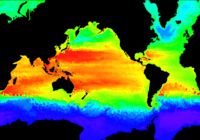
I have talked about climate change liability risks for company directors hereand here. Climate change has all the potential of turning into a major corporate governance issue.
Jeffrey Smith and Matthew Morreale from the law firm Cravath, Swaine & Mooresay that climate change is a whole new ball game for directors. They explain why in their New York Law Journal piece, republished in law.com.
They point out that there have been plenty of cases where shareholders have alleged directors failed in their duty of care. Climate change, they say, is not that far removed.
"Without forcing the parallels, because climate change is in many respects sui generis, a similar suite of allegations could readily be brought against a company for its responses to this new challenge," they write.
"A utility might be challenged for the way it conducted a technical investigation to determine its greenhouse gas (GHG) emission reduction strategies.
"A company might be faulted for its dealings with significant external forces, such as nonuniform and volatile state and regional regulations, or the rapidly evolving science related to management of its carbon footprint, such as the cost and feasibility of carbon sequestration technology. A company might also ill-advisedly entrust the technical assessment of its carbon emission position to employees who lack necessary skills or market sophistication."
What makes climate change different, they say, is that there are five new variables: uncertain and fragmented environmental legislation and regulations; the reactions of capital and insurance markets to emerging business opportunities (and matching risks) posed by climate change; stakeholderactivism; pending litigation and the rapidly evolving scientific debate over proper responses to climate change.
Exactly how this will play out remains to be seen. But what's clear is that directors can no longer afford to ignore it.
Efforts to control bribery failing
19 Jul 2007

The latest Transparency International Progress Report on OECD Convention Enforcement suggests that the battle against bribery and corruption has run into a brick wall.
The report blames it on a lack of political will. The most striking example of that is where it slams the British Government for quashing its investigation into BAE Systems'
funny money deal with Saudi Arabia. According to the report, that sent a worrying signal to governments around the world.
"The termination by the United Kingdom of the investigation of bribery allegations against BAE Systems on the Al Yamamah arms project in Saudi Arabia presents a serious threat to the convention,'' the report said. "The UK government's assertion that national security concerns overrode the commitment to prosecute foreign
bribery opens a dangerous loophole that other parties could assert when investigations may offend powerful officials in important countries."
In its report covering 34 countries, Transparency International found there had only been significant enforcement in 14 of them.
Countries where there had been no prosecutions were Argentina, Australia, Austria, Brazil, Chile, Czech Republic, Estonia, Finland, Greece, Iceland, Ireland, Mexico, New Zealand, Poland, Portugal, Slovak Republic, Slovenia and the United Kingdom. Countries which had prosecuted were Belgium, Bulgaria, Denmark, France, Germany, Hungary, Italy, Korea, the Netherlands, Norway, Spain, Sweden, Switzerland, and the United States.
The fact that many countries are not doing anything about the problem is a significant worry. As one New Zealand official said in the report: "Anecdotal evidence suggests that bribery of foreign officials is not particularly uncommon, but has been rationalised as a necessary means of doing business.The deficiencies or obstacles to enforcement have to do with an apparent lack of courage and will to get to grips with the issue both in legal and ethical senses.There seems to be an attitude which abhors the idea of bribery and corruption of officials within New Zealand, but accepts a different or lower standard with respect to bribery and corruption offshore."
The evidence in the report suggests it's a view shared by other countries. Which means the bribery problem is not going away.
L’Oreal found guilty of racism
7 Jul 2007

A division of French cosmetic giant L'Oreal has been fined€30,000 ($US41,000) and one of its officers given a suspended three months prison sentence for systematic racial bias.
L'Oreal unit Garnier has been found guilty of excluding non-white women when it recruited people to hand out its samples of its shampoo and discuss styling with shoppers. The company had set out exactly what size it expected the women to be, and also specified that they needed to be "BBR", the initials for bleu, blanc, rouge, the colors of the french flag. Anyone who has spent time in France knows that BBR is code used by the the far right. For employers, it's code for whites only. Asians, North Africans and Africans needn't apply.
Women with foreign sounding names or with a photo showing they were of North African or African background were eliminated. And the most chilling revelation came from one candidate who said she realized she wouldn't get the job because she was of mixed race. Some obvious historical parallels there.
L'Oreal claimsits business is a "celebration of diversity" and it's famous slogan is "Because you're worth it". Obviously in L'Oreal's view, you're worth a lot more if you're white.
While on the subject, let's not forget that Anita Roddick raised many eyebrows when she sold Body Shop to L'Oreal for for a cool £652 million ($US1.3 billion), prompting claimsthat the self-styled social activist was a hypocrite. Some time later, Roddick claimedshe was really a "trojan horse" who by selling her business to a huge firm, was putting herself in a position where she would influence the decisions it made.
Let's see if she says anything now!
London to overtake New York and rival Silicon Valley
11 Jun 2007
Here's a warning to America. Within the next eight years, London will overtake New York as the world's financial hub, and it will rival Silicon Valley as a technology centre.
And it's got nothing to do with Sarbanes-Oxley!
According to a Developing the Future study by Microsoft, consultancy Intellect, the British Computer Society and London's City University, London's capital markets will have overtaken New York, and it will rival Silicon Valley in the number of internet-based start-ups being launched. London's Soho will have the biggest movie
digital effects industry outside Hollywood and the UK will lead the world in the production of video games.
What's driving this trend is not US regulation. It's the way the UK has embraced the so-called "Knowledge Economy". It's the fastest growing component of the UK economy, taking in sectors such as financial services, IT, business services and creative services. In less than three years' time, the report says more than half of Britain's GDP will be generated by people who create "something from nothing", with the economy rapidly developing into a fully-fledged knowledge-based economy. According to the report, the Knowledge Economy employs 41 per cent of all workers by occupational classification and 40 per cent of GDP by industry classification. It's expected to reach 50 per cent by 2010.
It's also very much about the way London has positioned itself in world markets.
"With its unique overlap of financial services, technology, media, venture capital, and
government interests, London is rapidly becoming a global hub for a new class of entrepreneur as well as being an international capital for creative industries such as digital effects for the film industry and video games. The emergence of rapidly expanding economies in developing countries such as China and India are simultaneously creating new business opportunities for UK-based enterprises."
The report does point to some challenges ahead, particularly as to whether Britain can produce enough skilled graduates to meet the soaring demand.
Still, the most striking thing here is that these changes are happening regardless of US regulation.
That's not to say the costs of Sarbanes-Oxley have had no effect. But it's part of a much bigger story.
Private equity conflicts
8 Jun 2007

Earlier this year, I looked at how an Australian regulatory authority, the Takeovers Panel, was moving to address conflicts of interest that occur in private equity takeovers where managers and boards of directors align themselves with the bidder.
The Takeovers Panel has now issued a guidance note that subjects company boards to more stringent controls. The key is that it requires boards to establish protocols for executives, directors and external advisers. If they stand to benefit from a successful takeover, they would need to be quarantined from deliberations on whether a bid should be accepted. The document doesn't spell out what the protocols should be - sensible really because every bid is different - but it makes the point that meetings between bidders and a target's conflicted executives need to be supervised. It also says that in some cases executives must stand down or resign.
Will it stop conflicts? Probably not completely. The Takeovers Panel itself admits that the rules aren't bullet-proof and implicitly suggests that if some managers and directors want to find a way around them, they will.
"Market participants should note that solely complying with the example protocols discussed above may not necessarily be adequate or sufficient in terms of their duties and responsibilities to manage all conflicts of interests faced by participating insiders."
The panel has a point. Private equity firms don't like hostile takeovers which means they are dependent on getting a recommendation from management. And also, managers and boards of directors these days like getting some skin in the game.
As a result, conflicts might be inevitable, regardless of the rules.
Climate change liability risks
7 Jun 2007
Climate change is shaping up as a nightmare liability issue for companies, insurers and directors.
Consider these scenarios: a utility has a power outage caused by a climate change-related extreme weather event. The entire area is plunged into darkness and chaos, businesses lose a fortune and launch a lawsuit against the utility. Or shareholders who sue a company for ignoring their resolutions calling on the business to address climate change. The lawsuit claims that company did nothing about it, and as a result the business was hit hard by climate-change related events, and the share price tanked.
Impossible? Think of the lawsuits that have hit the tobacco and fast food industries? What's different here?
Broc Romanek
editor of TheCorporateCounsel.net is holding a free webconference on impact of climate change on the duties and liabilities of boards of directors next Tuesday.
And if you want to brush up on some of these potential issues before next week, check out a disturbing paper written by Christina Ross, manager of technical services at LaCroix Davis, Evan Mills, staff scientist at Lawrence Berkeley National Laboratory, and Sean Hecht, executive director of The Environmental Law Center at UCLA School of Law.
The paper Limiting liability in the Greenhouse: insurance risk management strategies in the context of global climate change covers the insurance industry but the implications go well beyond.
Indeed as the writers point out, insurers are "uniquely positioned between the two
ends of the climate-change spectrum-the causes and impacts. Insurers insure carbon-intensive industries as well as homes, autos, and pollution-emitting airplanes that are some of the primary causes of anthropogenic greenhouse gas emissions. Many of these insured businesses will bear the brunt of the cost of climate change impacts. At the same time, insurers and their trade allies expose themselves to the liabilities faced by customers of these insured businesses, and to 'in-house' liabilities potentially arising from their own actions in responding to the challenge."
The section on directors' liability is particularly alarming.
The writers point out that 53 per cent of the largest 500 publicly held companies are doing a bad job at disclosing climate risks to investors and, as a result, are at risk of shareholder lawsuits. They warn that potential liability for breach of the duty of care will grow. And directors might even be vulnerable to allegations of fraud or misrepresentation if there is evidence that officials ignored or covered up material information.
Clearly, we are entering uncharted waters.